Toscana

Client: Autorità di Sistema Portuale del Mar Adriatico Centrale
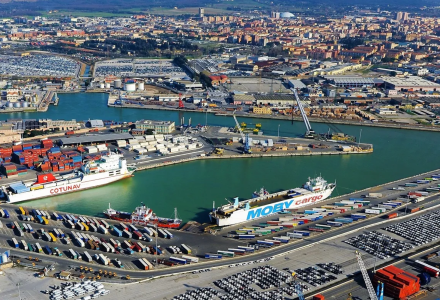
The project concerns the design, implementation, and management of the Port Community System (PCS) of the Port System Authority of the Central Adriatic Sea, supporting the ports of Ancona and later extended to other harbors (e.g., Vasto).
The PCS platform represents the core digital infrastructure for the port community, aimed at:
The project is part of the transition towards Single Window models and logistics interoperability, contributing to improved efficiency and competitiveness of the port system.
Key project features
The project involved support, evolutionary maintenance, and management of the Port Community System (PCS) for the ports of Ancona, Pesaro, Falconara, San Benedetto del Tronto, Pescara, Ortona, and Vasto, based on the proprietary LISy (Logistic Information System) platform. The solution was designed with a modular and scalable architecture, capable of supporting integration among the main stakeholders of the port and logistics-customs community.
The platform enables integrated management of vessel cycles, cargo operations, customs flows, and administrative workflows, ensuring interoperability with national maritime and customs systems. Key distinguishing elements include a high service level ensured through a structured help desk and dedicated SLAs, the ability to coordinate multiple public and private stakeholders, and continuous management of regulatory and technological evolution.
The project also included the progressive extension of the PCS to new ports, ensuring operational continuity, architectural reuse, and integration with heterogeneous and constantly evolving systems such as PMIS and AIDA.
Technologies and standards used
The LISy platform is developed using a web-based SOA architecture with an Enterprise Service Bus (ESB) integration middleware, ensuring system interoperability and scalability. The solution uses Java technologies, JBoss and Apache environments, SQL Server databases, and VMware virtualized infrastructures hosted in redundant data centers.
The system integrates XML/SOAP services, HTTPS protocols, machine-to-machine communications, and EDI/EDIFACT standards for structured information exchange between port operators, authorities, and national systems. The platform directly interfaces with the AIDA system of the Customs Agency and PMIS / National Maritime Single Window of the Harbour Authorities.
Main application modules include VESSEL for vessel cycle management, CARGO for logistics and terminal operations, CUSTOMS for customs processes, PORT AUTHORITY for administrative and statistical workflows, REPORT/BI for data analysis, and ADMIN for system configuration and user management. The project was developed following ITIL v3, PMBOK methodologies, and ISO 9001 standards, with security systems based on multi-level authentication and SSL protocols.
Benefits and results
The project enabled the creation and evolution of the Port Community System supporting the port community, fostering the digitalization of document, logistics, and customs processes. Integration between public and private supply chain operators contributed to improved operational efficiency, reducing processing times and procedural errors.
The platform increased transparency and traceability of information flows, while also improving the quality of statistical and decision-making data. Thanks to the modular and scalable structure of the system, the PCS was extended to additional ports, ensuring service continuity through corrective and evolutionary maintenance activities.
Interoperability with national maritime and customs systems further strengthened coordination between entities, authorities, and logistics operators, contributing to the overall optimization of port processes.