
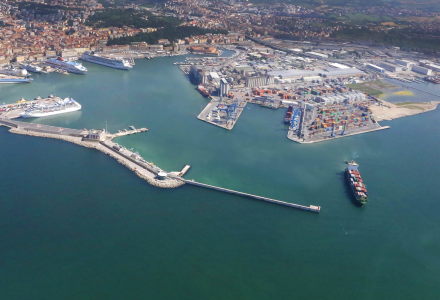
Ancona, Pesaro, Falconara, San Benedetto del Tronto, Pescara, Ortona, Vasto

Experts in the development of software platforms for the integrated management of port logistics processes and intermodal transport
NODO is an integrated software suite designed to manage all logistics processes involved in intermodal transport. In particular:
• It coordinates delivery and pickup operations
• It manages the daily activities of intermodal terminals
• It digitizes and optimizes rail shunting processes
• It extends and enhances port community services
Developed natively on a microservices architecture, NODO is a flexible and scalable solution, designed for integration with the VIVO and SINFONIST suites.
It is intended for terminal operators, shunting companies, and Port Authorities, with the goal of simplifying, connecting, and making operational processes more efficient.
Designed for those who deal every day with the complexity of logistics, NODO offers modern, intuitive, and fully integrated tools, with the ambition of becoming a reference platform in Italy and abroad.

STRENGTHS OF NODO:
A selection of our best projects to fully discover our skills and the passion we put into every challenge. Every result achieved is the result of our commitment to tackling complex challenges and translating customer needs into projects.

NODO PRODUCTS AND MODULES:
Key benefits: Terminal and gate inspection visits, document control (import documentation, etc.), ISTAT declarations, Port Tracking module, Environmental Monitoring, Energy Monitoring, and Import/Export management.
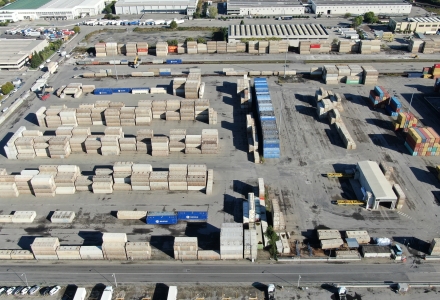
Key benefits: Master data management (wagons, trains, terminal areas, drivers, etc.), booking of pickup/storage units, full lifecycle management of cargo units, trip management (ship/train/truck), yard management, high integration (freight forwarders, shippers, MTOs, etc.).
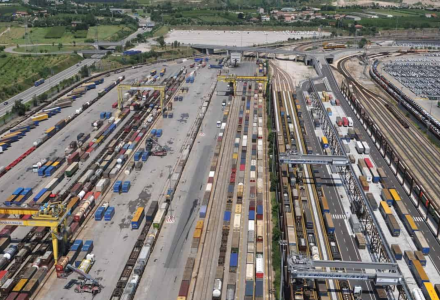
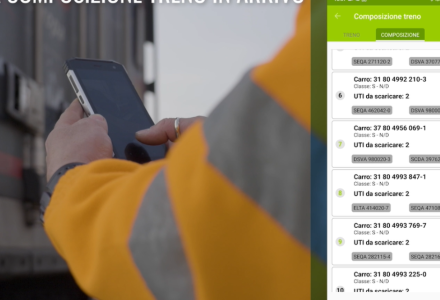
Key benefits: Service request management from connected facilities, support for planning shunting activities, train trip management, execution of shunting operations / crew management, real-time wagon positioning, wagon and locomotive master data.
Key benefits: Fleet and driver master data, slot management, access booking, truck pre-notification, high integration (PCS / TOS / GOS / TMS).
EDI Center Module (EDIGES / EDIFACT): this application manages M2M data exchange using standard formats. It uses its own integration language to decouple data sources from structures, forming the application domain of NODO.
DSM Module: the Document System Management module provides document services for application microservices. It offers reusable UI components specifically designed for integration with major market document management systems via public APIs.
KPI Module & Reporting: a transversal plug-in-based module that enables different visualization modes to be selected. It also supports the generation of related reports.
Billing Module: this module manages all activities related to the final invoicing process. Every event/activity can be included in the final bill (e.g., unit dwell time).