Liguria

Client: Autorità di Sistema Portuale del Mar Ionio
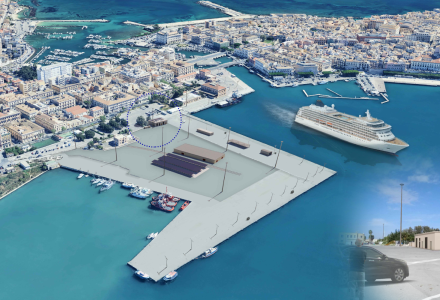
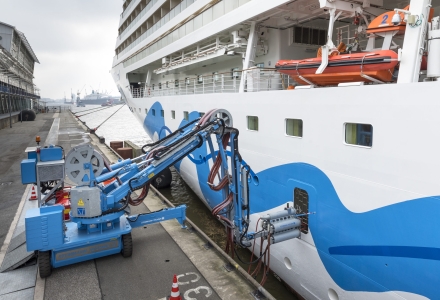
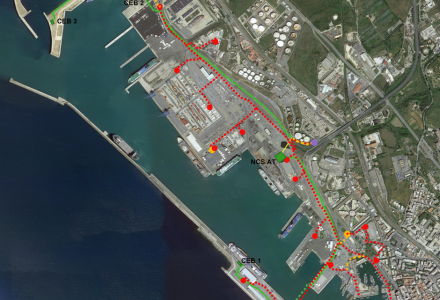
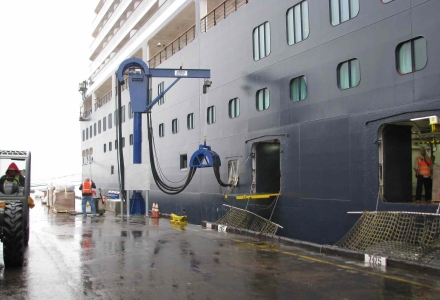
Preparation of the technical-economic feasibility design, pursuant to Article 23, CO. 5 and 6 of D.LGS 50/2016 and the MIMS/CSLLPP guidelines, as well as coordination for safety during the design phase (CSP), for the electrification of port quays (Cold Ironing), consisting of 3 Cold Ironing systems serving public and concession-operated quays within the Port of Taranto. In order to quantify the environmental benefits of the system, the following data were collected, analyzed and implemented as a basis for the design development: average handling volumes of approximately 61,826 TEUs per month and an average vessel capacity of 8,500 TEUs. Based on consolidated traffic of approximately 741,948 TEUs/year, an average traffic of 87 vessels per year was estimated, corresponding to a total energy demand of 3.7 GWh/year.
The Cold Ironing systems were designed in compliance with the IEC 80005-1 standard (“Utility connections in port – Part 1: High Voltage Shore Connection (HVSC) systems – General requirements”). For the systems serving container and tanker vessels, shore power is provided at 6.6 kV and 60 Hz. For the Cruise Terminal systems, operating voltages of 11 kV and 6.6 kV are envisaged, with the option of either 50 Hz or 60 Hz frequency.
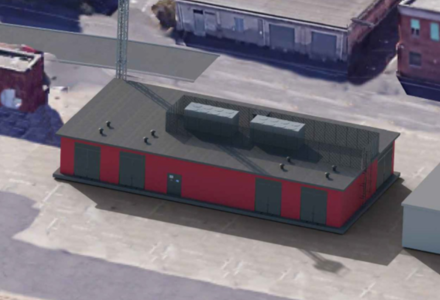
The designed electrical and special systems include: medium-voltage electrical systems with low-voltage transformation and related distribution, main and secondary switchboards with power distribution systems, standard and emergency lighting systems, motive power systems, grounding systems, UPS units, fire detection systems, and frequency conversion systems for supplying ships at either 50 Hz or 60 Hz.
The project also includes the monitoring and control of all systems associated with the Cold Ironing infrastructure in order to automate ship-to-shore connection operations, reducing operating times and minimizing risks related to potential electrical switching errors. The automation system design complies with IEC 80005-2 (“Utility connections in port – Part 2: High and Low Voltage Shore Connection systems – Data communication for monitoring and control”).
A new Primary User Substation has also been designed, with a high-voltage (150 kV) connection to the National Electricity Grid, from which 20 kV medium-voltage power is distributed to the I Sporgente and Pontile Petroli berths.
The mechanical systems were designed to ensure the proper operation of the electrical and electronic equipment installed within the newly constructed substations. These systems include cooling and ventilation for the electrical rooms (housing frequency converters, MV and LV switchboards, UPS systems, and batteries), as well as mechanical ventilation for transformer rooms.